Showing posts with label ios. Show all posts

Tuesday, June 21, 2011

New Adobe Flash Builder lets make iOS, Android, PlayBook apps...


Adobe on Monday announced the availability of Flash Builder 4.5 and Flex. 4.5, a pair of tools that let developers easily code applications for iOS, Android and the BlackBerry PlayBook. Adobe’s tools now provide developers with a single platform for building apps across each of the three popular mobile operating systems. “The reaction from developers to the new mobile capabilities in Flash Builder 4.5 and the Flex 4.5 framework has been absolutely fantastic,” said Adobe’s VP of developer tooling, Ed Rowe, said in a statement. “They are amazed by how easy it is to create great mobile apps for Android devices, BlackBerry PlayBook, iPhone and iPad.

Companies can now effectively reach their customers no matter what type of device they have.” Adobe’s new Flash Builder 4.5 Standard is available immediately for $249 and a premium version is available for $699. Flex 4.5 is a free open source framework. Both tools are also included in Adobe’s Creative Suite 5.5.


Please share this article on Facebook, Twitter and more...


Sunday, June 19, 2011

Top 10 favorite iOS apps...


Apple, over time, has introduced different apps for different uses and some of them have stayed on top forever. Here is a list of the top 10 iOS apps:
Pocket God: The app places you as the God to a small set of worshippers in an isolated land. The game has additional mini-levels with new storylines. The graphics of the game is enhanced and has a gripping gameplay. It costs $0.99.


Angry Birds: Angry Birds is a must in any list, be it iOS or Android or Maemo. The gripping and addictive gameplay the app offers has seen enormous popularity since its launch. The graphics is simple yet enhanced with challenging levels. When the game became popular, the developers brought out plush toys and costumes. The best thing about the app is that you get regular updates of levels and additional versions. The app costs $0.99.
Movies By Flixster: This free app gives you access to local movie times and movie theatre locations and has seen great popularity with iPhone users. The app is also popular with iPad users.


AppBox Pro: One app which brings all other gadgetry app under one section for just $1.99. It has a flash light, a currency converter, calculators, alarm clock and a wide list of other useful features in one single pack which is just under 20MB.
Skype: Skype, initially, started off slow but reached popularity soon. In the beginning the app did not allow calls over 3G in the US, but still became a favorite with its web audio and video calling options. Later this free app introduced the feature over Wi-fi and 3G.
Paper Toss: One of the silliest games, but still gripping and challenging where your aim is to toss a piece of paper into a waste bin. The game was made free because in-game advertisements were introduced on the top of the screen.
Shazam: A free app for identifying songs that you liked on the radio. Shazam was one of the first few apps to introduce such a feature. It has been one of the most downloaded apps since its launch.
Tap Tap Revenge 3: The app was available for $1.99. The game integrated great tunes with rhythm tapping. The app has introduced a new top chart song every week from Coldplay, Lady Gaga or Taio Cruz. Tap Tap Revenge 4 was later introduced and made free for download.
Pandora Radio: a customized Web radio was an instant success with iPhone users. The free app made its presence felt when Apple introduced multitasking for iOS.
Facebook: One of the most popular free apps ever downloaded from the App Store. Over a 100 million use the app from their phones to stay connected and socialize. The app evolved over time with improved additions and features.
Please Share it on Facebook,Twitter & more...


Saturday, May 28, 2011

Future Mobile OS war


as you know there are 3 different mobile os's available, and you can use what ever you want
actually this is a war who will win this war?

IOS thoughts - With its easy-to-use interface, amazing features, and rock-solid stability, iOS — Apple’s mobile operating system — is the foundation of iPhone. And even as other phones try to catch up, the technologies and features built into iOS 4 keep it years ahead of the competition.

Future Mobile OS war


as you know there are 3 different mobile os's available, and you can use what ever you want
actually this is a war who will win this war?

IOS thoughts - With its easy-to-use interface, amazing features, and rock-solid stability, iOS — Apple’s mobile operating system — is the foundation of iPhone. And even as other phones try to catch up, the technologies and features built into iOS 4 keep it years ahead of the competition.

Thursday, May 26, 2011

AndroidLoader is Now Available for iOS Device

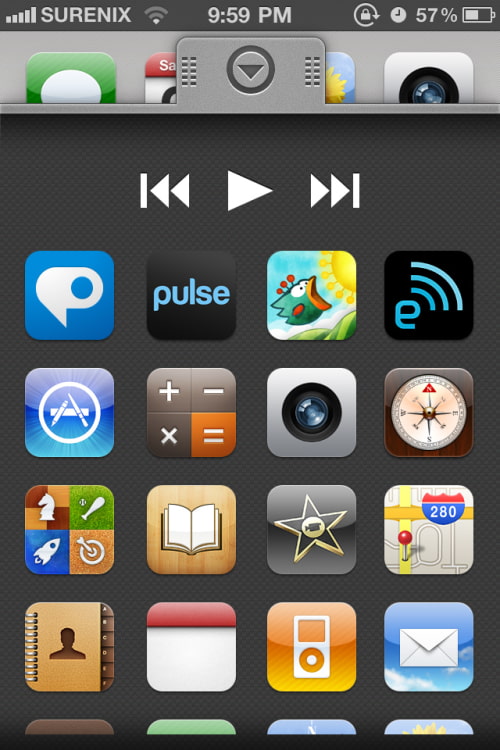
AndroidLoader is a new Cydia Tweak that allow you to launch and view the Apps in one place and it's from Android Style, AndroidLoader is available for all iOS device except iPad but soon it will work on it, The Tweak may take over Springboard.


Also AndroidLoader is a new customizable by using Winterboard or Dreamboard, you can download AndroidLoader from Modmyi for $2.99, before I go here's a small video shows AndroidLoader Functions :

AndroidLoader is Now Available for iOS Device

AndroidLoader is a new Cydia Tweak that allow you to launch and view the Apps in one place and it's from Android Style, AndroidLoader is available for all iOS device except iPad but soon it will work on it, The Tweak may take over Springboard.


Also AndroidLoader is a new customizable by using Winterboard or Dreamboard, you can download AndroidLoader from Modmyi for $2.99, before I go here's a small video shows AndroidLoader Functions :

iOS 5 Homescreen With Dashboard Widgets Concept [VIDEO]

Two weeks ago, we reported on a user interface concept by Jan-Michael Cart for a great implementation of speech recognition on the iPhone. Now he’s back at it with a concept for implementing widgets into iOS, a feature that can already be found in Android and Mac OS X.

Widget Concept

This concept proposes replacing the spotlight screen, which is currently used for searching. While the search box would still be there, an additional button would be created to add widgets, such as Facebook, from a pre-populated list. Widgets would be placed in "home screens", just like apps, except app screens would be placed to the right of the spotlight screen, while widget screens would be placed to the left. When the search box is in use, the widgets on the spotlight screen would automatically hide so search results could be displayed, much like what happens in the current version of iOS. Widgets would presumably be downloadable from Apple’s own app store, or included with Apps themselves.

Jan-Michael Cart has published another widget concept in the past. The main difference between it and the new one is that the former would allow widgets to be moved to app screens. That’s no longer the case with the new concept.

I think it’s legitimate to ask whether widgets are worth the effort or not. Widgets are essentially applications running in the background, using up processing power, batter life and data from a possibly already pricey data plan. There would have to be a way to manage those widgets in a way that it wouldn’t put so much of a strain on the phone’s hardware on the cellphone bill, and that at the same time would preserve user-friendliness. In addition, launching an app whenever its needed might turn out to be more efficient than having to scroll across different home screens just to access the desired widget.

Either way, this concept brings up a good point: there’s still work to be done on iOS as far as notifications and integration with web services are concerned. Whether we’ll need to go down Android’s route and implement widgets will be up in the air, but we’ll need more than the same old push and badge notifications.

iOS 5 Homescreen With Dashboard Widgets Concept [VIDEO]

Two weeks ago, we reported on a user interface concept by Jan-Michael Cart for a great implementation of speech recognition on the iPhone. Now he’s back at it with a concept for implementing widgets into iOS, a feature that can already be found in Android and Mac OS X.

Widget Concept

This concept proposes replacing the spotlight screen, which is currently used for searching. While the search box would still be there, an additional button would be created to add widgets, such as Facebook, from a pre-populated list. Widgets would be placed in "home screens", just like apps, except app screens would be placed to the right of the spotlight screen, while widget screens would be placed to the left. When the search box is in use, the widgets on the spotlight screen would automatically hide so search results could be displayed, much like what happens in the current version of iOS. Widgets would presumably be downloadable from Apple’s own app store, or included with Apps themselves.

Jan-Michael Cart has published another widget concept in the past. The main difference between it and the new one is that the former would allow widgets to be moved to app screens. That’s no longer the case with the new concept.

I think it’s legitimate to ask whether widgets are worth the effort or not. Widgets are essentially applications running in the background, using up processing power, batter life and data from a possibly already pricey data plan. There would have to be a way to manage those widgets in a way that it wouldn’t put so much of a strain on the phone’s hardware on the cellphone bill, and that at the same time would preserve user-friendliness. In addition, launching an app whenever its needed might turn out to be more efficient than having to scroll across different home screens just to access the desired widget.

Either way, this concept brings up a good point: there’s still work to be done on iOS as far as notifications and integration with web services are concerned. Whether we’ll need to go down Android’s route and implement widgets will be up in the air, but we’ll need more than the same old push and badge notifications.

Wednesday, May 18, 2011

Bad News: Apple Working On Shrinking Micro-SIM Cards For Future iOS Devices

Bad News for srilankan iPhone lovers**
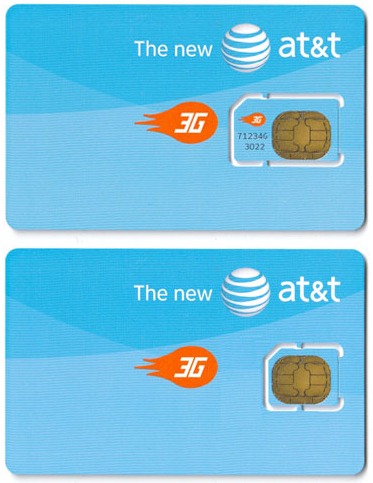
In its quest for ever-shrinking hardware, Apple has proposed a new, smaller SIM card for its connected devices according to Reuters. The new design, which is even smaller than the current iPhone 4′s micro-SIM has apparently already won the backing of French telecom giant Orange.


Image credit: APC

"We were quite happy to see last week that Apple has submitted a new requirement to (European telecoms standards body) ETSI for a smaller SIM form factor — smaller than the one that goes in iPhone 4 and iPad," said Anne Bouverot, Orange’s head of mobile services.

"They have done that through the standardisation route, through ETSI, with the sponsorship of some major mobile operators, Orange being one of them," she told the Paris leg of the Reuters Global Technology Summit.

As MacRumors points out, the new standard could be in smartphones as early as next year once technical details have been concluded.

Apple was the first smartphone manufacturer to move to the new micro-SIM cards when it launched the first generation iPad in January 2010 and has since moved its iPhone range to the smaller form factor. Smaller SIM cards enable designers and manufacturers to save space inside handsets, enabling them to either add new chips (and thus new functionality) or to shrink footprints. Both are considerations for Apple currently with talk of NFC chips being added to the next iPhone release as well as a need to constantly make its phones smaller and lighter than the competition.

Follow me on twitter

Bad News: Apple Working On Shrinking Micro-SIM Cards For Future iOS Devices

Bad News for srilankan iPhone lovers**
In its quest for ever-shrinking hardware, Apple has proposed a new, smaller SIM card for its connected devices according to Reuters. The new design, which is even smaller than the current iPhone 4′s micro-SIM has apparently already won the backing of French telecom giant Orange.


Image credit: APC

"We were quite happy to see last week that Apple has submitted a new requirement to (European telecoms standards body) ETSI for a smaller SIM form factor — smaller than the one that goes in iPhone 4 and iPad," said Anne Bouverot, Orange’s head of mobile services.

"They have done that through the standardisation route, through ETSI, with the sponsorship of some major mobile operators, Orange being one of them," she told the Paris leg of the Reuters Global Technology Summit.

As MacRumors points out, the new standard could be in smartphones as early as next year once technical details have been concluded.

Apple was the first smartphone manufacturer to move to the new micro-SIM cards when it launched the first generation iPad in January 2010 and has since moved its iPhone range to the smaller form factor. Smaller SIM cards enable designers and manufacturers to save space inside handsets, enabling them to either add new chips (and thus new functionality) or to shrink footprints. Both are considerations for Apple currently with talk of NFC chips being added to the next iPhone release as well as a need to constantly make its phones smaller and lighter than the competition.

Follow me on twitter

Bad News: Apple Working On Shrinking Micro-SIM Cards For Future iOS Devices

Bad News for srilankan iPhone lovers**
In its quest for ever-shrinking hardware, Apple has proposed a new, smaller SIM card for its connected devices according to Reuters. The new design, which is even smaller than the current iPhone 4′s micro-SIM has apparently already won the backing of French telecom giant Orange.


Image credit: APC

"We were quite happy to see last week that Apple has submitted a new requirement to (European telecoms standards body) ETSI for a smaller SIM form factor — smaller than the one that goes in iPhone 4 and iPad," said Anne Bouverot, Orange’s head of mobile services.

"They have done that through the standardisation route, through ETSI, with the sponsorship of some major mobile operators, Orange being one of them," she told the Paris leg of the Reuters Global Technology Summit.

As MacRumors points out, the new standard could be in smartphones as early as next year once technical details have been concluded.

Apple was the first smartphone manufacturer to move to the new micro-SIM cards when it launched the first generation iPad in January 2010 and has since moved its iPhone range to the smaller form factor. Smaller SIM cards enable designers and manufacturers to save space inside handsets, enabling them to either add new chips (and thus new functionality) or to shrink footprints. Both are considerations for Apple currently with talk of NFC chips being added to the next iPhone release as well as a need to constantly make its phones smaller and lighter than the competition.

Follow me on twitter